

The Nightingale of Wittenberg
The upheavals of the Reformation within the era’s musical language have yet to be explored. A team of artists (singer and sackbut player) and musicologists will inquire into the historical and religious contexts as well as the musical rhetoric stemming from its Gregorian roots…
> Faculty
> Method
> Calendar
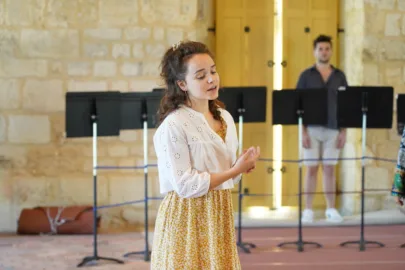
Dirk Snellings, singer, artistic director of the Capilla Flemenca Ensemble, Professor at the Lemmens Institute in Louvain and the Royal Flemish Conservatory in Antwerp.
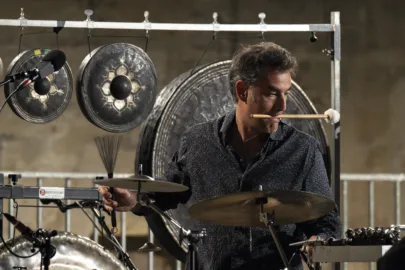
Wim Becu, sackbut, artistic director of the Oltremontano Ensemble, Professor at the Musikhochschule in Cologne and the Hochschule für Kunste in Bremen.
Lambert Colson, musicologist (dissertation at the CESR of Tours on the Motet in the Holy Empire at the end of the 16th century), cornetto
Grantley McDonald, musicologist and research adjunct at the Katholieke Universiteit Leuven, graduate of the University of Berlin, the Warburg Institute (London) and the Australian Academy of the Humanities.
10 participants:
> five singers (soprano, alto, two tenors, low bass)
> five early wind players (cornetto, sackbuts, dulcian).
A high level of sight-reading is expected; experience in singing/playing polyphony is a prerequisite. The instruction will be given in French and English.
The upheavals of religious belief and practice that occurred throughout the sixteenth century brought about fundamental changes of attitudes towards music, and hence to musical style. The aim of this course is to explore two paradoxical elements:
1) the continuity of musical style from Gregorian chant to Lutheran polyphony;
2) the way in which fundamental changes of belief brought about by the Lutheran Reformation altered the way in which musicians understood what they were doing.
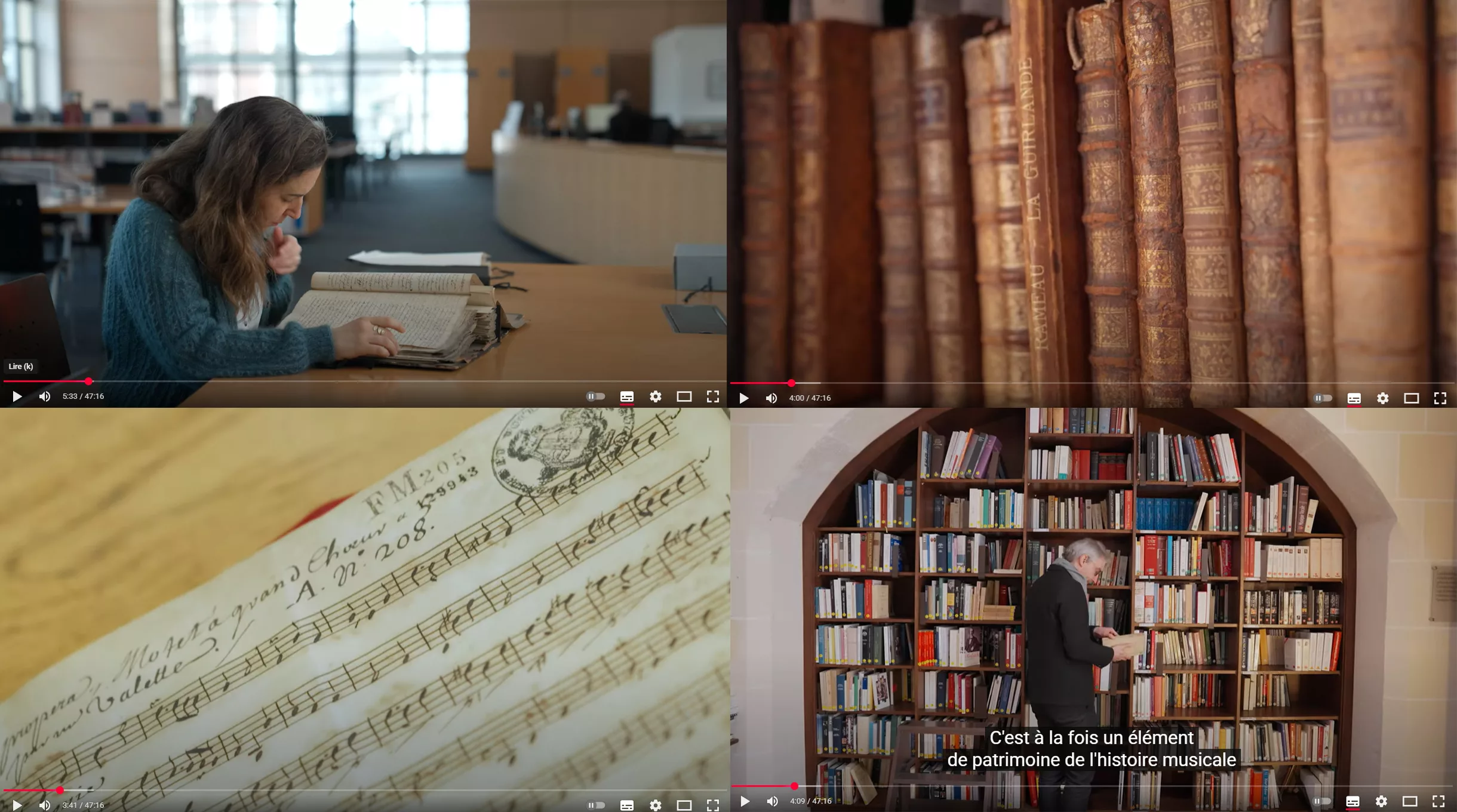
The first five-day session will focus on the musical and intellectual background of music in the Lutheran Reformation: the musical practices of the late middle ages and their transformation in the Reformation. This segment of the course will make particular use of valuable sources held by the François Lang Music Library: Gregor Reisch’s Margarita philosophica (1503), the theoretical writings of Gioseffo Zarlino, and the Dulcissimæ quædam harmoniæ of Johann Knöfel (1571). The second week will focus on musical life in a number of important centres in the Holy Roman Empire (Vienna, Prague, Nuremberg, Breslau, Kassel, Wolfenbüttel, Munich and Augsburg).
Classes will be given alternatively as group lessons, in the form of workshops or as individual lessons.
This course will combine instruction in the historical and musical background (2.5 hours each morning), practical exploration of the music studied (2.5 hours each afternoon), and rehearsal of the music for the concerts performances (2.5 hours each evening). The course will also include a visit to the Musée national de la Renaissance (Écouen) in the context of the exhibition on the German Renaissance.
In addition, each participant will have two private lessons with Wim Becu (wind players) or Dirk Snellings (singers).
Study of the historical and musical context. Detailed analysis of the music in the light of Catholic and Lutheran beliefs and their political implications in the 16th century.
Notions of musical rhetoric.
Introduction to the notation of the 15th and 16th centuries.
Examination of the mediaeval heritage of musical thought; detailed coverage of the question of music, belief and politics in the sixteenth century, from Catholic and Lutheran perspectives, with particular attention on the work of Johann Knöfel and Leonhard Päminger; exploration of the interface between monophonic and polyphonic song in the fifteenth and sixteenth centuries; coverage of the question of musical rhetoric in the sixteenth century; introduction to reading and performing from fifteenth and sixteenth century notation.
Auditions
Tuesday 24 January in Brussels
Monday 6 February in Paris
Instrumentalists’ programme:
- reading of a 16th-Century motet from the facsimile
- Motet/Madrigal in diminution
Singers’ programme:
- 4-voice motet sung in ensemble (15 minutes of preparation)
- early-Baroque solo piece: Monteverdi, Viadana, Caccini, Verdelot, Severi
- a plain chant
Sessions
From Monday 5 March through Friday 9 March 2012: music and the Lutheran Reformation.
From Monday 9 April through Friday 13 April 2012: music in the Germanic Holy Roman Empire.
for 10 days of instruction
Public presentation
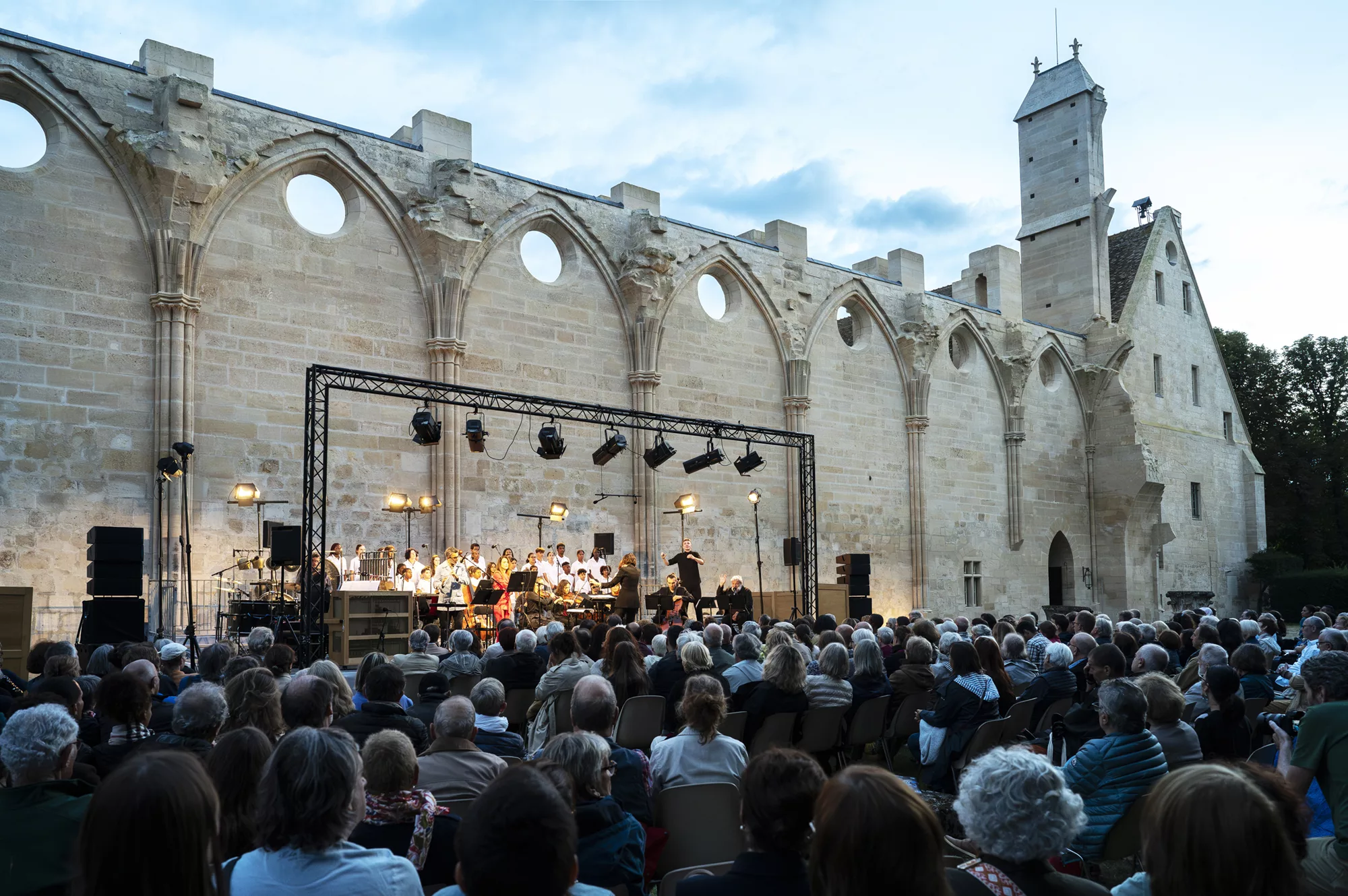
Fenêtre sur cour[s] on Friday 13 April 2012 at 6 pm
The cost-sharing fee is made up of a compulsory registration fee (including membership in the Association des amis de Royaumont and access to the François Lang Music Library), tuition, and boarding expenses.
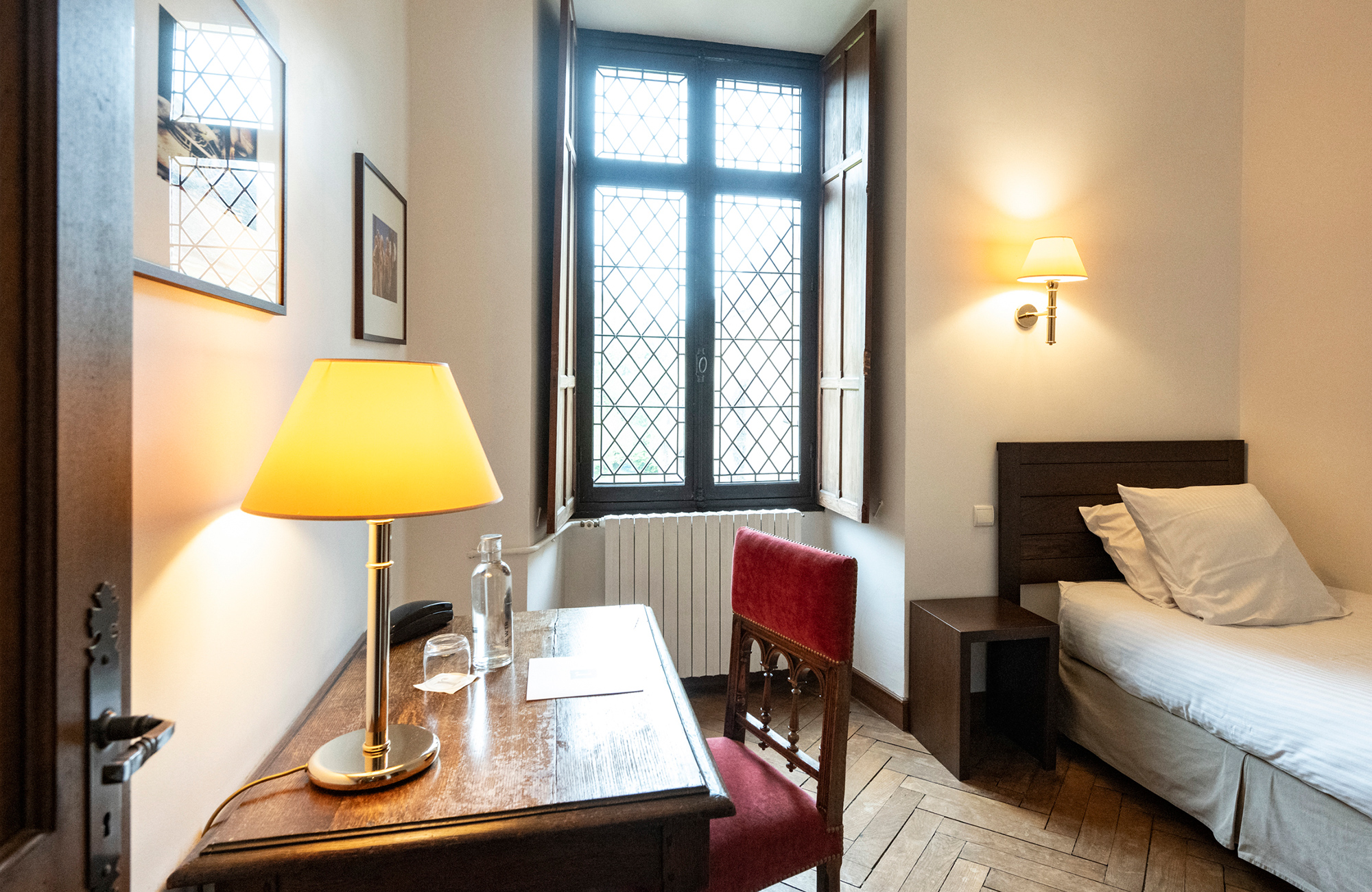
The Royaumont Foundation takes over expenses for accomodations (room, board and breaks) during the entire duration of the training.
Financial aid for tuition
› for salaried employees (full or part time): via their employers’ continuing education programs.
› for the unemployed: instructions available from the local funds or Pôle emploi.
› for RMI beneficiaries: via authorities in each département (Conseil Général) – contact the appropriate services for further information.
If you are eligible for such financial assistance, only the enrolment fee remains at your expense, that is in the amount of 174 €.
Scholarships
The Association des Amis de Royaumont grants scholarships to singers born after the 1st January 1984 and instrumentalists born after 1st January 1987 who do not yet have a regular professional activity.
This grant is made during Board meetings of the Association on the basis of a portfolio (resume, letter of motivation).
If you are eligible for financial aid from the Association des amis de Royaumont, a total amount of 174 € remains at your expense.
For participants who cannot qualify for any other financial aid, the Foundation grants scholarship stipends on request and based on a portfolio.
If you are eligible for this scholarship from the Association des amis de Royaumont, a total amount of 224 € remains at your expense.
Upload
Voix nouvelles specific application form
PRCC specific application form
Contact :
Mélanie Guichard
Fondation Royaumont
F-95270 Asnières-sur-Oise
tel + 33 1 30 35 59 84